Sunday, October 24, 2010

The Cover Evolution


I always hated the Dick and Jane books, in part because I was too advanced a reader by the time we got them in school, and in part because of their illustrations. It is particularly the memory of their covers that gives me a queasy feeling even today.
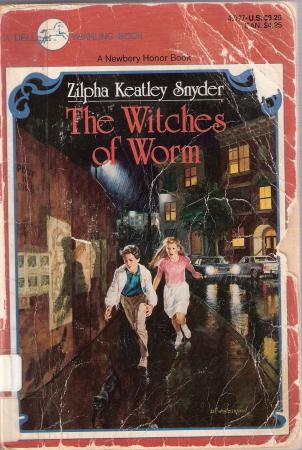
Like fiction prose, book illustration also follows changing fashion. These two pictures show covers of excellent middle-grade novels. They have the same publisher, but are from two different eras. The cover for Hiaasen's more recent Hoot is streamlined and neutral, yet intriguing. The older one, Snyder's Witches of Worm, has many problems: it's too busy, it misrepresents a serious psychological study of a girl as a mystery romp, and it gives away part of the ending (the girl and the boy aren't speaking for most of the story).

Of course, what a middle-grade novelist really wants is a movie still on the cover, since that means she's sold her story as a screenplay!

Sunday, October 17, 2010

Poison Pen

Is my literary touch poison? I have an uncanny ability to attach myself to doomed projects. At the risk of seeming solipsistic, I feel sometimes that my very interest blows in the breath of doom. Magazines go under, anthologies get scrapped, projects lose their funding, just as I've become devoted to contributing to them. Does this happen to everyone with such alarming frequency?

Thursday, October 7, 2010

And the Winner Is...

I'm surprised to find myself ready to enter two fiction contests and contemplating a third. Up to now I have avoided contests, discouraged by picturing myself as a needle in a haystack. Then I realized that every submission to a potential publisher has dismal odds, and getting my work seen by an editor is good no matter what. Any unsolicited submission is, in effect, an entry in a fiction contest.

Of course I'm being careful to avoid scams, and would never pay an entrance fee unless it actually paid for a subscription to the sponsoring zine.

Regarding this third contest I'm considering, the question arises whether it's worth being a needle in that particular haystack. Since the contest has a theme and it's not inspiring me, I'd probably be offering myself as a dull, bent needle, lost before I even enter. To have any kind of a chance, the gladiator should at least stride into the arena waving a bright, shiny sense of self.

Friday, October 1, 2010

The "Duh" Twist

Kudos---a Greek word that is singular, not plural, my friends---to Joe Haldeman, who wins my Best Novel Ending Award for The Accidental Time Machine. It's a brand new award, which is why you haven't heard about it. Very low key ceremony, no need to rent a tux.

Obviously, I can't tell you the book's conclusion. But it's the rare twist ending that is clever yet somehow inevitable. Once you read it, you think, "Well, yeah. I suppose that had to happen." Yet it's not what you've been expecting for the last third of the book. Let's call it the "duh" twist. Skilled!

Thursday, September 23, 2010

Stories of Old

Unroll your parchment. Dig out your quill pen. Dust off your IBM Selectric. Pick your favorite historical period and write about it for fame, glory, and untold wealth. Children's Writer is sponsoring a contest for a 1500-word historical fiction short story targeted at 13-year-olds. Check out the complete rules at Historical Fiction Writing Contest. Deadline is October 30, 2010, so there's still plenty of time to conjure up the past.

Tuesday, September 14, 2010

Possibilites in Plausibility

I can't count the number of novels, plays, and movies ruined for me because I'm so picky about plausibility. "Wait, why would he do that?" I ask myself so loudly, it drowns out the story's own dialog. "Why didn't the CIA notice that?" "Where did she get that rope?"

Rarely would I raise this complaint about 007 movies, say, which routinely defy the laws of physics (let alone the probability that a trained marksman will hit his target) in the name of escapist entertainment. That said, the eternal question of "where does the Highlander stash his sword when he rides his motorcycle?" is, over time, wearying.

The problem mainly bothers me in more serious, introspective, or supposedly frightening works, where a deus (or simply a res) ex machina and downright magical luck can sever my connection to the narrative and my belief in the characters. Being picky is a curse, but many curses can be re-conceived as blessings.  My duty, then, is to use my overactive incongruity sensor to improve the details of the plots I write.

Wednesday, September 8, 2010

Mysteries of Creation

Don't misunderstand: I claim no godlike skill. But I must insist the creation of a plot is a thing of wonder, an inexplicable thing. If I am so amazed at my own meager ability to make a story where there was none before, imagine the electrification felt by a genius at work. No wonder so many of them drink.

This isn't a joke. I am amazed every time I can come up with a story. A topic comes to mind, a setting, a main character, a basic conflict. That, in and of itself, is heartening. But what really astounds me is how, every time I sit down with this story, more details come to me. Plato believed that there was no real learning or experience; it was all recognition from past lives. I have to admit, curmudgeonly skeptic that I am, that I feel like I am remembering stories when I write them. As each layer of detail gets added on, I have the sensation that my memory has simply become clearer.